


Archeologist Subclass for Artificers (DnD 5e)
Have you ever wanted to become an Archeologist in Dungeons and Dragons 5e? This new Artificer 5e subclass guide will walk you through all the rules you need to make a character who is both useful and effective. Learn about tools and artifacts, magical items, and monster knowledge, so that your journey into the world of D&D will be an unforgettable one. Use as an NPC for maximum effect. (Please note that this character subclass is “ok” for a heavy RP campaign, and will not be powerful in a hack-and-slash dungeon crawl.)
Archeologists is a Subclass for Artificers that can choose to get a Specialized Homonculus servant. This servant does not have a fly speed. It also does not have the stealth bonus normal Homunculi have, nor can it make any damaging attacks. On the other hand, it is immune to falling damage, and has a borrowing speed of 5′. It can also be directed to cast the Cantrip Mold Earth with a casting time of 1 minute.
Archeologist Artificers have the ability to find and salvage odd pieces of magical items. You can put these salvaged materials to use by channeling your artificer know-how, infusion points, and special magical components to construct powerful devices. Additionally, you don’t need to worry about being limited on resources as long as you can think of something creative with the salvaged materials you come across while adventuring. With enough time and effort, even the most mundane objects can be transformed into formidable weapons or life-saving devices! This ability progresses when you grow in power.
Spell List
You always have certain spells prepared after you reach particular levels in this class, as shown in the Archeologist Spells table. These spells count as artificer spells for you, but they don’t count against the number of Artificer spells you prepare.
3rd Level

Detect Magic, Identify
5th Level
Locate Object, See Invisibility
9th Level
Arcane Eye, Clairvoyance
13th Level
Divination, Locate Creature
17th Level
Legend Lore. Detectification
Archeological Features Progression
3rd Level Features
Archaeology Apprentice: You gain proficiency in the Investigation skill.
Salvaged Technology: You know how to salvage and repurpose technology from a futuristic or prehistoric era. You gain the ability to use salvage to recreate technological items and relics. You can use salvage to create a variety of items such as a flashlight, a fire starter, a first aid kit, and other small items that might resemble futuristic wonderous items (meaning not a weapon, armor, or anything not considerably found in the wonderous item list – ask your DM about this).
Common Salvage: In an archeology site, you can spend 8 hours and 20 gp spent on salvage to create one of these wondrous items. The item is considered to be magical and requires attunement. It should not be more powerful than any common wonderous magical item.
5th Level Features
Archaeology Expertise: You gain expertise in Investigation, allowing you to double your proficiency bonus when making an ability check using that skill.
Uncommon Salvage: In an archeology site, you can spend 2 days (8 hours each) and 200 gp spent on salvage to create one wondrous item. The item is considered to be magical and requires attunement. It should not be more powerful than any uncommon wonderous magical item. (Investigation skill check)
9th Level Features
Advanced Archaeology: You gain a +2 bonus to your Investigation skill and Proficiency in your Survival skill.
Uncommon Craft: You can use salvage to craft magical items such as a wand, staff, rod, or ring with a rarity of uncommon. These items require 2 days (8 hours each) of work and 200 gp spent on salvage to create. (Both Arcana and Investigation skill checks must succeed.)
Rare Salvage: In an archeology site, you can spend 6 days (8 hours each) and 2000 gp spent on salvage to create one wondrous item. The item is considered to be magical and requires attunement. It should not be more powerful than any uncommon wonderous magical item. (Investigation skill check.)
15th Level Feature
Master Archaeologist: You gain an additional +2 bonus to your Investigation and Survival skills, and expertise on Survival. Additionally, you can use salvage to craft magical items such as a sword, armor, or other magical items with a rarity of uncommon or rare. These items require 6 days (8 hours each) of work and 2000 gp spent on salvage to create.
Rare Craft: You can use salvage to craft magical items such as a weapon, wand, staff, rod, or ring with a rarity of rare. These items require 6 days (8 hours each) of work and 2000 gp spent on salvage to create. (Both Arcana and Investigation skill checks must succeed.)
Very Rare Salvage: In an archeology site, you can spend 18 days (8 hours each) and 30000 gp spent on salvage to create one wondrous item. The item is considered to be magical and requires attunement. It should not be more powerful than any very rare wondrous magical item. (Investigation skill check.) On a Nat20 Investigation Skill for Varey Rare Salvage, your DM may augment your “find” to Legendary by removing the “Attunement” characteristic, or by adding another ability.
Other Archeologist Adaptations
(DM approval needed)
Detect Magic 1st Level Spell additional functionalities: Archeologists are able to detect any nonmagical relic or artifact within a 30–foot radius. If they find more than 3, they designate this as an archeological site.
Archeologists (artificer subclasses homebrew) are able to use their knowledge of antiquity to discern which items have magical properties with 50% accuracy if observed from less than 3 feet away (1-minute examination), or with 90% accuracy if examined for 1 hour in a site or lab.
20th-level Archeologists are able to sense the presence of powerful relics and artifacts within a 60–foot radius, as well as the direction in which they are located. They are able to communicate with any relics or artifacts that can communicate with sentience. This Subclass for Artificers may use Diplomacy to convince them to reveal a secret they hold, but each time this is attempted the artifact can use diplomacy on the Archeologist too.
Archeologists, your favorite artificer subclass, while in their lab or Archeological site, they can evaluate any item’s market price with 90% accuracy.
Possible quest for an Archeologist party
Find the Dragonkiller Armor and weapons.
Protect a dig near the Lake Mountains from Elven assassins.
Very Ancient (before the fall of the Egg) Archeological site finds
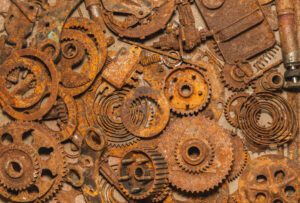
Ancient Archeological site


This artificer subclasses dndbeyond integration was too much for us to make. If you can do this for us please do! And link to this page 😉
What other subclasses do you think will be fun?
(Other than artificer artillerist and the artificer alchemist that already exist.)
What is the best subclass for artificer?
The Archeologist, of you are into RP, and the Armorer if you love combat.
What are artificer subclasses called?
Archeologist, Archivist, Alchemist, Armorer, Artillerist, Battlesmith, Forge Adept, Mastermaker, and Maverick.
Do artificers have subclasses?
Well yes! Check out our homebrew in play, and send us your experience to showcase!







![Discover the Timeless Charm of Mostabaat: A High Fantasy City in DND 5e Nestled near the majestic white lime cliffs, Mostabaat is a city steeped in history and wonder, making it a must-visit destination in the realm of DND 5e. [ez-toc] In this blog post, we'll take you on a journey through the enchanting streets of Mostabaat, where white limestone, wooden structures, and hints of red marble create a visual masterpiece.](https://dnd-world.com/wp-content/uploads/2023/09/concrete-structure-with-arches-480x384.jpg)